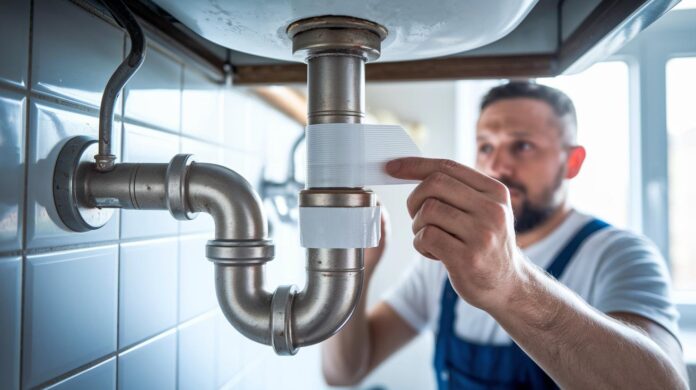

Quick Fix
What: Seal a leaky pipe
Time: 15 min
Skill: Beginner
Tools & Materials: PTFE tape (for threaded joints) or silicone tape (for small cracks), scissors
Cost: Parts $3–$10
Safety: Turn off water first
- Turn off the water supply.
- Dry the leaking area with a clean cloth.
- For threaded joints, wrap PTFE tape around the threads tightly. If the leak is from a tiny crack, wrap silicone tape smoothly.
- Trim any extra tape with scissors.
- Turn the water back on to check that the drip is gone.
By following these steps, you can stop the leak quickly and keep your home safe until you complete a full repair.
Leaky Pipe Tape Types: PTFE & Silicone Solutions
Quick Fix:
• What: Stop a leak using PTFE tape for threaded joints or silicone tape for small cracks.
• Time: 5–10 min
• Skill: Beginner
• Tools & Materials: PTFE tape, silicone tape, scissors, clean cloth
• Cost: Parts $3–$10
• Safety: Turn off the water before starting
• Steps:
1. Check if the leak is at a threaded joint or a small crack.
2. For threaded joints, wrap with PTFE tape to seal and lubricate.
3. For cracks, apply silicone tape while stretching and overlapping by about 50%.
4. Turn on the water to ensure the leak is stopped.
Pipe thread tape (commonly called PTFE tape) works best for sealing threaded joints. It fills gaps and makes unscrewing joints easier later on. If a copper pipe joint drips, a careful wrap of PTFE tape stops the leak until you can fix or replace the faulty part. This tape holds up as long as you don’t disturb the connection.
Silicone tape is ideal for small cracks along a pipe. This self-fusing tape stretches up to twice its length and bonds tightly to form a water barrier. For example, if a PVC pipe shows a hairline crack, wrap the area with silicone tape, keeping a steady tension and overlapping each round by about 50%. This method stops the leak fast, though it’s only a temporary fix until you get a lasting repair.
Each tape type has a special use. Choose PTFE tape for threaded joints to build a strong, lasting seal. Use silicone tape on smooth sections where a quick, temporary patch is needed.
Always use good-quality tape for the best waterproof seal and repair longevity. These quick fixes buy you time, but be sure to follow up with a proper repair to stop future leaks.
Preparing Pipes Before Applying Leaky Pipe Tape
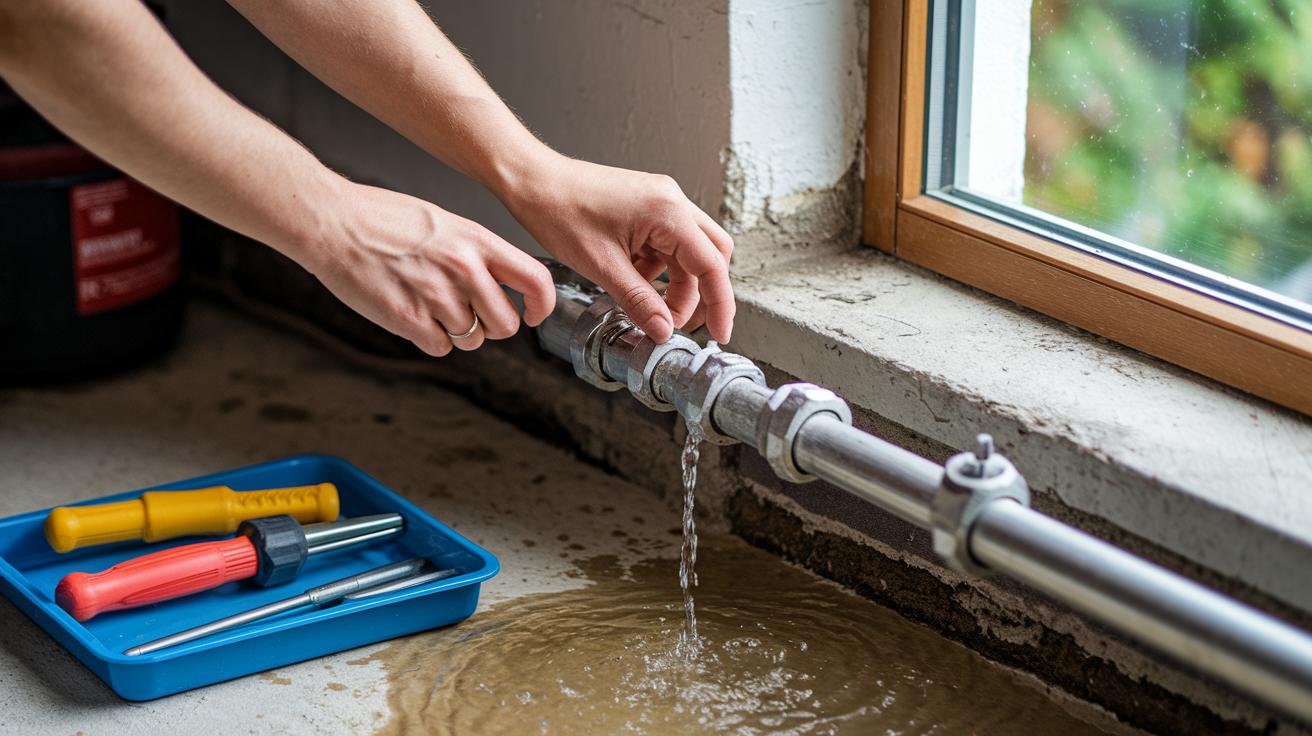
Quick Fix:
• What: Prepares the pipe for tape repair
• Time: 10 min
• Skill: Beginner
• Tools & Materials: Nearest water valve (or main supply switch), faucet, wire brush or clean cloth, pipe mending kit
• Safety: Turn off water before you start
- Turn off the water. Flip the nearest valve or the main supply if needed. This stops water damage while you work.
- Drain the pipe. Open a faucet located after the leak to empty any water. This avoids any moisture that could weaken the bond.
- Clean the leak area. Use a wire brush or clean cloth to scrub away rust, dirt, or scale. A clean surface helps the tape stick for a reliable fix.
- Dry the surface completely. Wipe off any remaining moisture. Think of it like painting a board; you would not paint it if it were wet.
- Once everything is dry, you can apply your DIY pipe mending kit. A dry area means a stronger seal and a better temporary fix.
Applying Self-Fusing Silicone Tape for Leaky Pipe Seals
Quick Fix:
• What: Stop a small leak on a smooth pipe
• Time: 15 min
• Skill: Beginner
• Tools & Materials: Self-fusing silicone tape, scissors, clean cloth or wire brush
• Cost: Parts $3–$10
• Safety: Turn off water before you start
-
Prepare the Area
• Turn off the water. Clean the pipe with a cloth or wire brush so it is dry and free of rust or dirt. -
Stretch the Tape
• Cut a piece of silicone tape long enough to cover the crack.
• Stretch the tape to 200% of its original length (for example, stretch a 4-in [10 cm] piece to 8 in [20 cm]) to trigger its self-fusing bond. -
Apply the Tape
• Start at one end of the crack and press the stretched tape firmly onto the pipe.
• Wrap the tape around the leak evenly, overlapping each layer by 50% to avoid gaps or air pockets. -
Seal, Cure, and Test
• Press the tape well to activate its bonding process.
• Allow it to cure for 5–10 min to form a tight, rubber-like seal.
• Slowly restore water flow and check the repair. Remember, this is a temporary fix until you can get a professional repair.
Comparing Pipe Thread Tape vs. Premium Leak Sealing Film for Leaky Pipe Repairs

Pipe thread tape (PTFE tape) is used to seal the male threads of pipe joints. It fills in the gaps, reduces friction, and stops leaks by creating a tight, durable seal that works best when the joint remains undisturbed. This tape is low cost, very easy to apply, and can hold a repair well as long as you leave the joint alone.
Premium leak sealing film is made for tiny pinhole or hairline leaks along pipe sides. It is a multi-layer wrap that sticks over small cracks and uneven surfaces to form an immediate water barrier. While it shapes well to the pipe and seals leaks fast, you may need to reapply it when temperature or pressure changes. It acts as a quick, temporary fix rather than a long-term solution.
Below is a clear comparison of the two options:
| Tape Type | Best Use | Pros | Cons |
|---|---|---|---|
| Pipe Thread Tape (PTFE) | Sealing threaded joints | Long-term seal, easy to apply, low cost | Not for filling seamless cracks |
| Premium Leak Sealing Film | Pinhole and hairline mid-pipe leaks | Stops leaks immediately, conforms to pipe shape | Temporary fix, may need reapplication |
Keep in mind that if your pipe shows heavy corrosion or structural damage, neither option will replace the need for a full pipe replacement. They offer quick, temporary repairs to slow down leakage until you can make a proper, lasting fix. Your choice depends on the leak location and how long your repair needs to last.
Best Practices for Long-Lasting Leaky Pipe Repairs with Tape
-
Once you restore the water, keep an eye on the repair for 24–48 hours. Turn the water back on and check the taped joint a few times to catch any drips early.
-
If you notice any leaks, check the tape. See if it has moved or if the water pressure is making it come loose. Give the area a quick squeeze to test the bond.
-
If the leak still shows up, it’s time for a permanent fix. This taped repair is only a stopgap, so you might need a pro to solve the problem for good.
Limitations of Tape for Leaky Pipe Fixes and When to Call a Professional
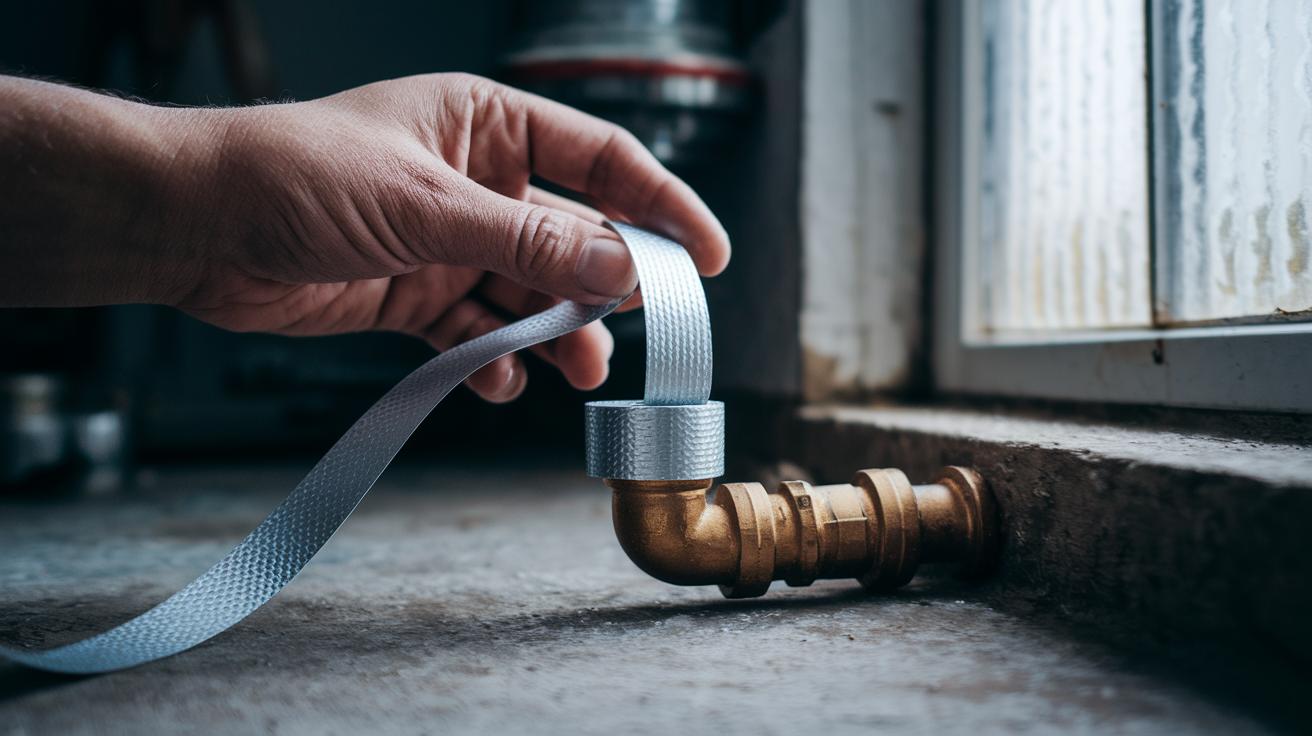
Quick Fix:
• What: Use tape to slow down a leak temporarily
• Time: 5-10 min
• Skill: Basic DIY
• Tools & Materials: Silicone tape, PTFE tape
• Cost: $1-$10
• Safety: Shut off water before starting
- Silicone tape works for quick fixes on smooth, mid-pipe cracks. It is only a temporary measure and is not meant for bolts or replacing an entire pipe.
- PTFE tape seals threaded joints. It does not work on smooth cracks or on pipes that are rusted or broken.
- Leaks in lead or galvanized pipes can cause flooding fast. For these pipes, you should call a licensed plumber right away.
- Cast iron pipes that are misaligned or heavily corroded may need professional clamps or a full replacement.
- Home repairs with tape are only a short-term solution. They need to be followed up with a proper fix that meets local codes and safety standards.
Remember, tape repairs can buy you time, but if the leak is in a critical spot or the pipe looks weak, it is best to call a professional.
Final Words
In the action, we saw how both pipe thread tape and silicone tape can offer quick, effective fixes for leaking pipes. We walked through cleaning, drying, and applying tape while highlighting each product’s unique benefits and limits.
We also covered best practices for a reliable seal and when a professional repair might be necessary. Using the right tape for leaky pipe repairs helps save time and money. Keep at it and feel confident fixing small leaks at home.
FAQ
Q: What is the best waterproof tape for leaky pipes?
A: The best waterproof tape for leaky pipes is usually either PTFE tape—which seals threaded joints—or self-fusing silicone tape that temporarily bonds over cracks to form a watertight barrier.
Q: Can you tape a leaking pipe, and how should it be done?
A: Taping a leaking pipe involves turning off the water, cleaning and drying the area, and then wrapping high-quality tape tightly over the leak. This method offers a quick, temporary seal until professional repairs occur.
Q: How do I choose the right Home Depot tape for my leaking pipe repair?
A: Choosing the right Home Depot tape means matching the tape to your leak type. Use PTFE tape for threaded joints or self-fusing silicone tape for hairline cracks, keeping in mind that both serve as short-term fixes.
Q: What is self-fusing tape and how does it work for water leaks?
A: Self-fusing tape stretches to bond with itself, creating an immediate, water-resistant seal over damaged areas. It is designed to cover small cracks and should be seen as a temporary fix until a permanent repair is made.
Q: Can tape help prevent freezing in pipes?
A: Tape to prevent freezing helps insulate exposed pipes. Specialized weatherproof pipe tape creates a seal against moisture and cold, though it should be used alongside other freeze-prevention measures for best results.
Q: What is rescue tape when addressing water leaks?
A: Rescue tape is an emergency leak-fix solution meant for small, sudden leaks. It provides a quick seal in critical moments until you can arrange for a more lasting, professional repair.