

Quick Fix
What: Stop a leaking PVC pipe
Time: 15 min
Skill: Beginner
Tools & Materials: Dry cloth, PVC solvent cement, gloves
Cost: About $5–$15
Safety: Turn off the water before you start
- Turn off the water supply to the pipe.
- Dry the area around the leak with a clean cloth.
- Apply the PVC solvent cement to the leaking spot.
- Hold the pipe parts together until the cement sets.
- Turn the water back on and check that the leak is fixed.
Follow these steps to quickly fix your leak and save money without extra hassle.
Step-by-Step Guide to Fixing a Leaky PVC Pipe
Quick Fix:
• What: Seal a leaking PVC pipe
• Time: About 2½ hours (15 min for initial set, 2 hr cure)
• Skill: Beginner
• Tools & Materials: PVC pipe cutter, medium-grit sandpaper, PVC primer, solvent cement, schedule 40 coupling, gloves, safety goggles
• Safety: Shut off the water first and work in a well-ventilated area
- Shut off the water completely to avoid any mess or injury.
- Use your PVC pipe cutter to remove the damaged section.
- Scrape off any extra glue or rough bits from the remaining pipe ends.
- Sand the cut edges with medium-grit sandpaper to give them a smooth finish.
- Wipe the pipe ends clean to remove dust and debris.
- Brush on PVC primer evenly (this helps the cement bond well).
- Immediately spread a generous layer of solvent cement over the primed areas.
- Slide the schedule 40 coupling onto the pipe ends, making sure they line up correctly, and hold firmly for about 30 seconds.
After these steps, let the joint set for 15 minutes and then wait 2 hours before turning the water back on. When you slowly restore the water, check all joints and the new coupling for any leaks. If you see any drips, add more cement to the affected area and allow it to cure again before testing.
Identifying Causes and Signs of Leaky PVC Pipe
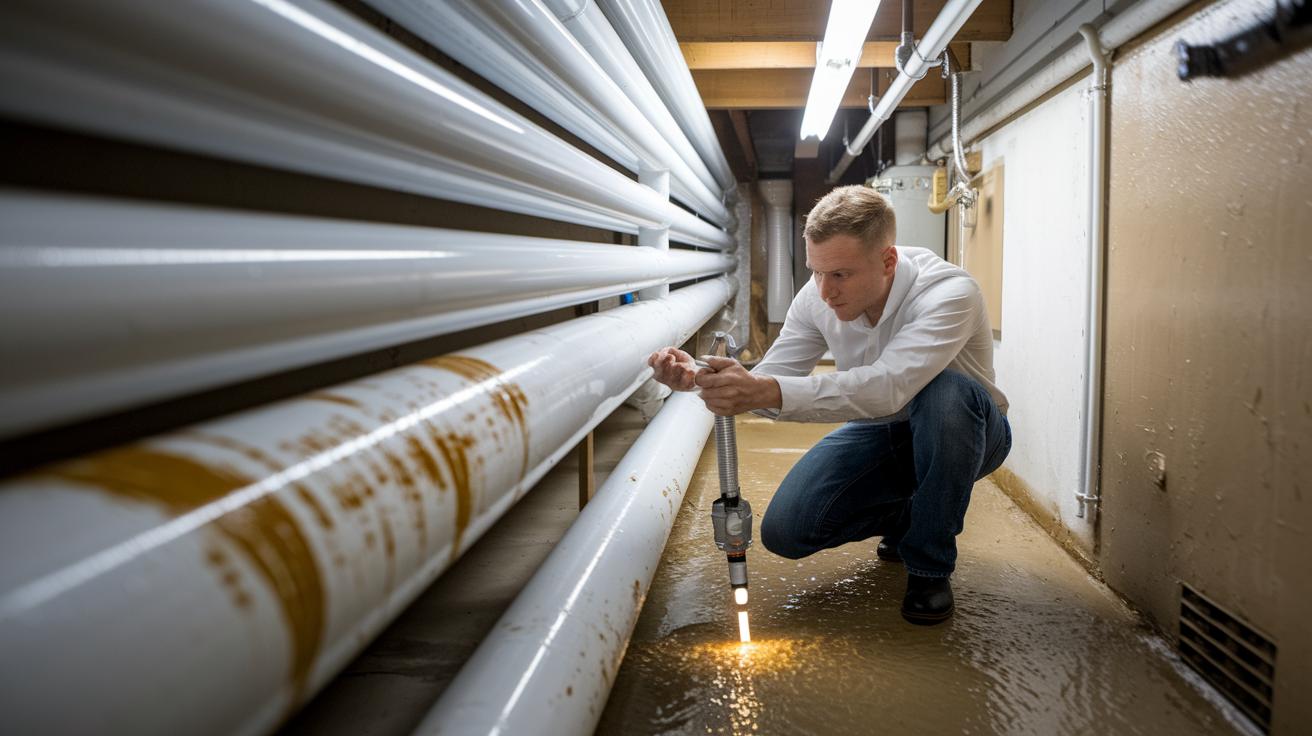
Quick Fix:
• What: Find the source of a leaking PVC pipe
• Time: 10–15 min
• Skill: Beginner
• Tools: Flashlight, paper towel
• Cost: Free
• Safety: Work in a dry area with proper lighting
- Check your pipe for damp spots, water stains, or faded color.
- Look for signs of aging or worn-out pipe material that may lower water pressure.
- See if the adhesive was misused – bad glue can cause mold and a rotten smell.
- Make sure the installation was done right; wrong fittings may show water stains or moisture.
- Notice if cold weather, like freezing temperatures, has created drips or puddles.
- Examine joints near soil that may shift, causing discoloration.
Finding the true cause early helps you repair the leak quickly and avoid bigger costs down the road.
| Cause | Sign |
|---|---|
| Age and wear | Lower water pressure |
| Wrong adhesive glue | Mold and rotten smell |
| Improper installation | Water stains or damp spots |
| Freezing temperatures | Drips or puddles |
| Soil movement | Discolored joints |
Regular checks at visible spots and in basements can spot leaks before they get worse. A careful, period look can catch early signs, so you fix them fast and keep your DIY work on track.
leaky pvc pipe fix sparks DIY success
Quick Fix:
• Outcome: Stop a low-pressure PVC leak fast
• Time: 5–10 min
• Skill: Beginner
• Tools & materials: Choose one, fiberglass resin tape, rubber repair tape, silicone repair tape, or two-part epoxy putty (mix before use)
• Cost: Parts $5–$15
• Safety: Turn off the water if needed
- Spot the leak in the area where water pressure is low.
- Dry and clean the section to improve tape or putty adhesion.
- For fiberglass resin tape, wrap it around the leak; it hardens on contact with water and may hold for months or even years, but avoid using it on high-pressure spots.
- Use rubber repair tape for a quick wrap on straight pipe sections. It is easy to apply but does not work well on joints.
- Apply silicone repair tape if you need a flexible and simple solution, keeping in mind that its seal is not as strong in areas of heavy use.
- Mix and press two-part epoxy putty over small cracks or joints if a sturdier fix is needed. It works well on isolated cracks but can be messy.
- Let the repair set for the recommended time and then check for any leaks.
These temporary fixes usually last for several months or even up to a year when water pressure is low. Just remember to schedule a permanent repair soon to prevent more damage and recurring leaks. Regular checks will help keep your PVC system working smoothly.
Essential Tools and Materials for Leaky PVC Pipe Fix
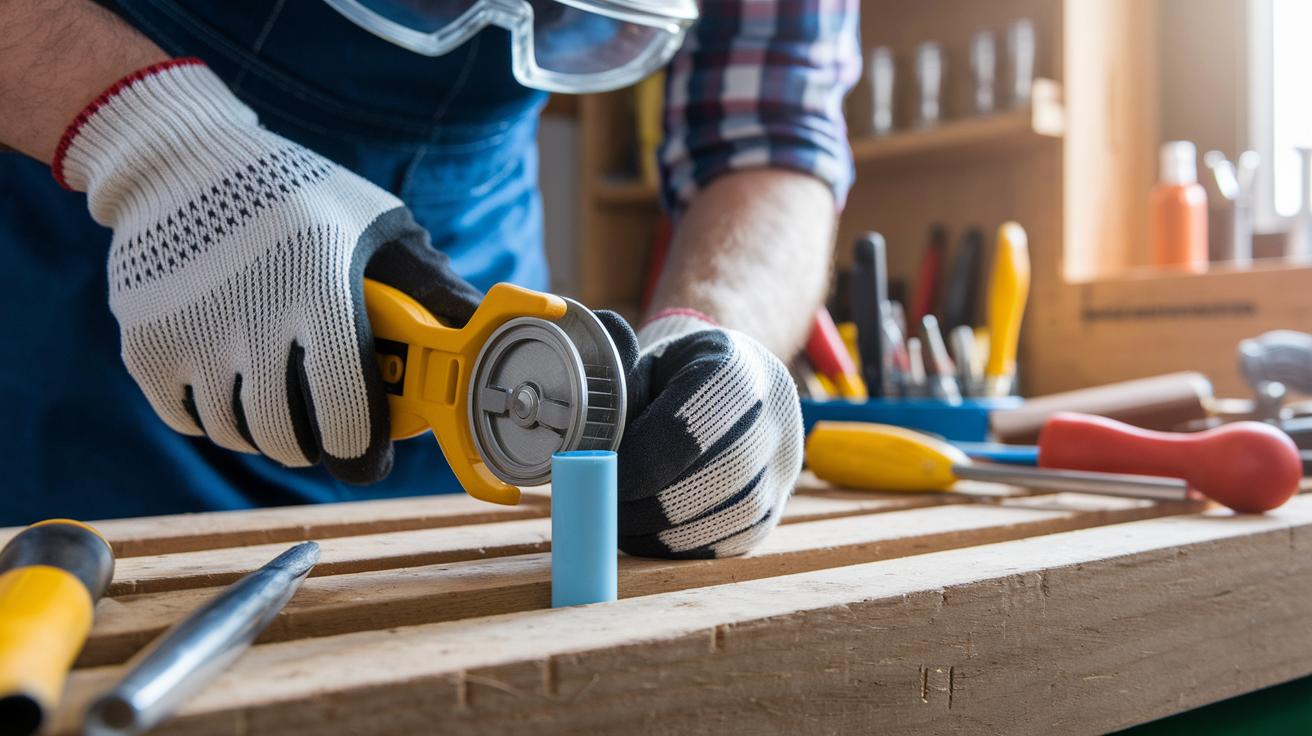
Quick Fix:
- What: Repair a leaky PVC pipe quickly
- Time: 30 min
- Skill: Beginner to Intermediate
- Tools & Materials: PVC pipe cutter, medium-grit sandpaper, PVC primer, PVC solvent cement, schedule 40 coupling, mixing stick, nitrile gloves, safety goggles
- Safety Snapshot: Wear gloves and goggles; keep your work area clear
Below is a detailed table that outlines each tool and material, their purpose, and tips for keeping your workspace neat.
| Tool/Material | Purpose |
|---|---|
| PVC pipe cutter | Cuts out the damaged section cleanly |
| Medium-grit sandpaper | Smooths the pipe edges for a better seal |
| PVC primer | Prepares the pipe for a strong cement bond |
| PVC solvent cement | Joins the pipe sections securely |
| Schedule 40 coupling | Connects and reinforces the repaired section |
| Mixing stick | Ensures epoxy putty is mixed evenly |
| Nitrile gloves | Protect your hands from chemicals and debris |
| Safety goggles | Guards your eyes from splashing materials |
When you choose a schedule 40 coupling, check that its diameter matches your pipe. Pick trusted brands for long-lasting repairs and keep your workspace organized so every tool is easy to find.
Troubleshooting and Preventing Future Leaky PVC Pipe Issues
Quick Fix:
• What: Find and fix small leaks in your PVC pipes
• Time: 15 min
• Skill: Beginner
• Tools & Materials: Soapy water, pressure source (like a faucet), pipe supports, insulation
• Cost: Parts $3–$10
• Safety: Shut off water if needed and keep pressure low
- After your repair, spread a soapy water solution on every joint and seam.
- Slowly increase the water pressure and watch closely for tiny bubbles. Bubbles mean you have a micro-leak that will need extra attention.
- Mark any spot that bubbles for a follow-up repair.
Additional Tips:
- Support your pipes every 3 feet to keep them straight.
- Cover exposed lines with insulation to stop damage from freezing.
- Check pipe joints once a year to catch wear early.
- Avoid overtightening fittings; this can cause cracks.
- Keep water pressure below 60 psi (4 bar) to reduce stress.
- Repeat the soapy water test from time to time for peace of mind.
Set up a monthly check, especially after harsh weather. If you see bubbles or water droplets, repair the leak soon. If leaks keep coming or the damage is bad, call a professional because they have the right tools and skills to fix the problem safely.
Final Words
In the action, we lined up safety steps, gathered the right tools, and set out clear numbered moves to fix the leak. We outlined how to spot issues and even applied quick fixes before moving to a permanent repair. Step-by-step details showed how to prep, glue, and test the setup. With this leaky pvc pipe fix method, you'll save money and feel confident handling the repair yourself. Keep your area safe and enjoy a job well done!
FAQ
How do you fix a leaking PVC joint without cutting or replacing it?
The approach to fix a leaking PVC joint without cutting or replacing it is to clean and dry the joint, then apply a quality PVC leak sealant designed for quick, temporary repairs.
What is the best leaky PVC pipe fix kit and can it be found at Home Depot?
The best leaky PVC pipe fix kit usually includes resin tape or epoxy putty and can be found at stores like Home Depot, offering a fast, stopgap repair for minor leaks.
What can I use to seal a PVC pipe leak?
To seal a PVC pipe leak, you can use a two-part epoxy putty or a specialized PVC joint sealant, both of which form a watertight bond when applied to a clean, dry surface.
Will plumber’s putty stop a leak on a PVC pipe?
Plumber’s putty is not recommended for PVC pipes because it does not adhere well to the smooth surface; using a proper PVC sealant or epoxy putty is a more secure repair option.
How do you fix a PVC pipe leak under the sink?
Fixing a PVC pipe leak under the sink involves shutting off the water, cleaning the leaking joint, and re-gluing with PVC primer and solvent cement to restore a watertight seal.