

Quick Fix: Replace Your Starter Relay Fuse
Outcome: Get your car starting again
Time: 15 min
Skill: Beginner
Tools & Materials: Screwdriver, new starter relay fuse, safety gloves
Cost: Parts $3–$10
Safety: Turn off your car and disconnect the battery first
- Open your car’s fuse box and locate the starter relay fuse.
- Remove the old fuse carefully using your screwdriver.
- Insert the new fuse that matches the old one.
- Reconnect the battery and test your car.
If your car still gives a clicking sound or won’t start, double-check that the fuse is seated firmly. This small part stops extra current from damaging your engine, so replacing it can be a quick and easy fix that gets you back on the road without a headache.
How to Diagnose and Replace Your Starter Relay Fuse
Quick Fix:
• What: Replace your starter relay fuse safely
• Time: 20 min
• Skill: Beginner with basic auto repair
• Tools & Materials: New fuse (same amperage), digital multimeter, screwdriver
• Safety: Disconnect the battery ground before you begin
-
Understand the Parts
The starter relay is an electrical switch with a coil (creates magnetism) and contacts that send power from the battery to the starter motor. When you turn the key, the relay gets a signal, starts the engine, then stops the current when the engine runs. -
Know the Fuse Role
The fuse protects the circuit from too much current. It breaks the circuit if extra current flows and stops damage to other parts. A good fuse keeps the starter circuit safe. -
Follow These Steps
- Look for starter signs like clicking sounds or a no-start.
- Disconnect the battery ground to be safe.
- Open the relay/fuse box to reach the fuse.
- Pull out the blown fuse carefully.
- Snap in a new fuse that has the same amperage.
- Reconnect the battery ground and try starting the engine.
-
Check Your Work
After you replace the fuse, make sure the engine cranks normally. Look at the wires near the relay and fuse box for any wear, loose connections, or chafing. Use your digital multimeter to test that voltage shows up at the relay output when the circuit is active. If you see damaged wiring or corrosion, clean or repair it to keep connections strong.
Keep your toolkit ready and remember: a little care now can save you big headaches later.
Essential Tools and Parts for Starter Relay Fuse Replacement

Before you begin, check that each part fits your vehicle. The right tools make the job faster and safer. Make sure your new fuse has the correct amperage for your car. Use a digital multimeter (a tool that tests voltage and continuity) to check the relay coil. A jumper wire comes in handy for bench testing. And always wear insulated gloves and safety eyewear for extra protection.
| Tool/Part | Purpose |
|---|---|
| Replacement Fuse | Restores circuit protection at the correct amperage |
| Digital Multimeter | Checks continuity and voltage |
| Jumper Wire | Activates the relay coil during bench testing |
| Socket/Wrench Set | Opens the fuse box or unscrews mounting bolts |
| Insulated Gloves | Shield your hands from electrical shock |
| Safety Eyewear | Protect your eyes from sparks and debris |
Double-check your vehicle’s specifications to confirm that every piece is compatible. Taking a few extra minutes now makes the replacement safer and easier. Using tools like the multimeter and jumper wire helps ensure the relay circuit works right after the fix.
Locating the Starter Relay Fuse in Your Vehicle
Quick Fix:
- What: Find the starter relay fuse.
- Time: 5 min.
- Skill: Beginner.
- Tools: Screwdriver or trim tool, jack (if needed).
- Cost: Free.
- Safety: Make sure the car is secure before you start.
Under-the-Hood Fuse Box
- Open your hood and find the big, black fuse box on the driver’s side.
- Unclip the cover and look at the diagram inside. It shows where each fuse and relay is placed.
- Match the diagram symbol to the fuse to locate the starter relay fuse. For instance, lift the cover and check the side marker.
Under-Dash Access
- Some vehicles hide the fuse box under the dash.
- Carefully remove or lower the dash panel with a screwdriver or trim tool.
- Once exposed, look for the fuse labeled "starter" among the set of fuses and relays.
Fender Relay Modules
- In certain cars, relay modules can be found near the right front fender.
- Before you remove a wheel, make sure the car is safely supported with a jack.
- Check near the wheel well for a small diagram or label that marks the relay clearly.
Testing Starter Relay Fuses: Steps and Precautions
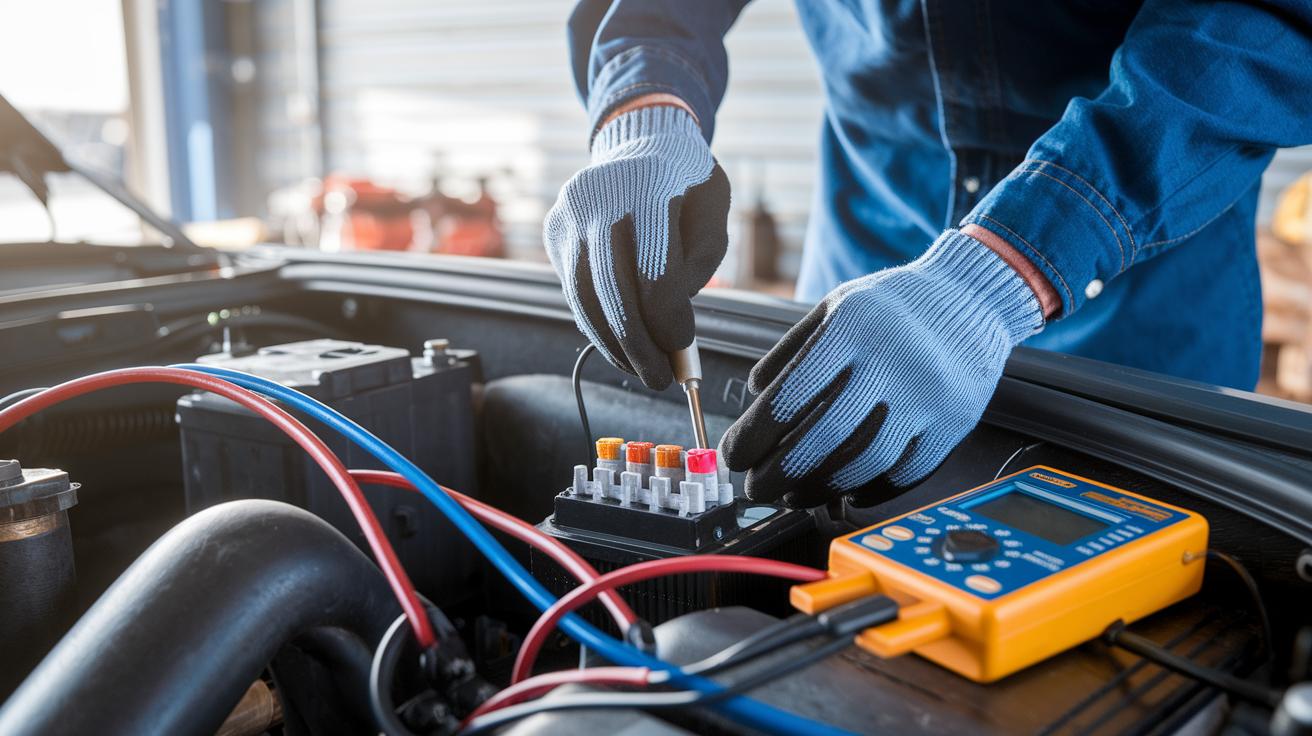
Quick Fix:
• What: Check your starter relay fuse
• Time: 15 min
• Skill: Basic electrical work
• Tools & Materials: Insulated gloves, safety glasses, jumper wire, digital multimeter, matching replacement fuse (if needed)
• Safety: Disconnect the battery’s negative (ground) terminal and work in a dry, clean area
-
Set Up Your Workspace
Clear your work area and make sure it is well-lit and dry. Disconnect the battery’s negative terminal to stop any sparks. Wear insulated gloves and safety glasses to protect yourself from sparks or battery acid. -
Test the Relay Coil
Take a jumper wire and connect it between the battery’s positive and negative terminals. Attach the jumper to the relay coil’s terminals. Listen for a click; that sound means the relay’s switch is working. -
Check the Fuse with Your Multimeter
Set your digital multimeter to measure resistance. Touch its probes to the two fuse contacts. A reading of 0 Ω shows the fuse has proper continuity. Next, power the relay using the jumper and switch your multimeter to measure voltage. Seeing the correct voltage on the output side shows power is flowing through the relay. -
Replace if Necessary
If you see an open circuit (infinite resistance) or an unexpected high voltage drop, the fuse is likely bad. Replace it with a fuse that matches your vehicle’s amperage rating to get proper circuit protection.
Common Symptoms and Troubleshooting of Starter Relay Fuse Issues
If you hear a rapid clicking or nothing happens when you turn the key, it may mean the starter relay fuse is faulty. This fuse helps carry power from the battery to the starter motor, and a break in the circuit stops the starter.
If the engine sometimes cranks and then quickly stalls, the fuse could be causing the problem. This stop-and-start behavior shows an interruption in the power flow during key turns.
Check the fuse closely. Look for any signs of corrosion, melted contacts, discoloration, or warped plastic that suggest overheating. You can test the fuse by using a jumper wire for a quick bypass. Insert the jumper between the relay terminals, and if the starter works, the fuse is likely the issue, not the wiring.
Replace the old fuse with a new one that has the same amperage to restore a smooth start-up circuit.
Safety Precautions for Starter Relay Fuse Replacement
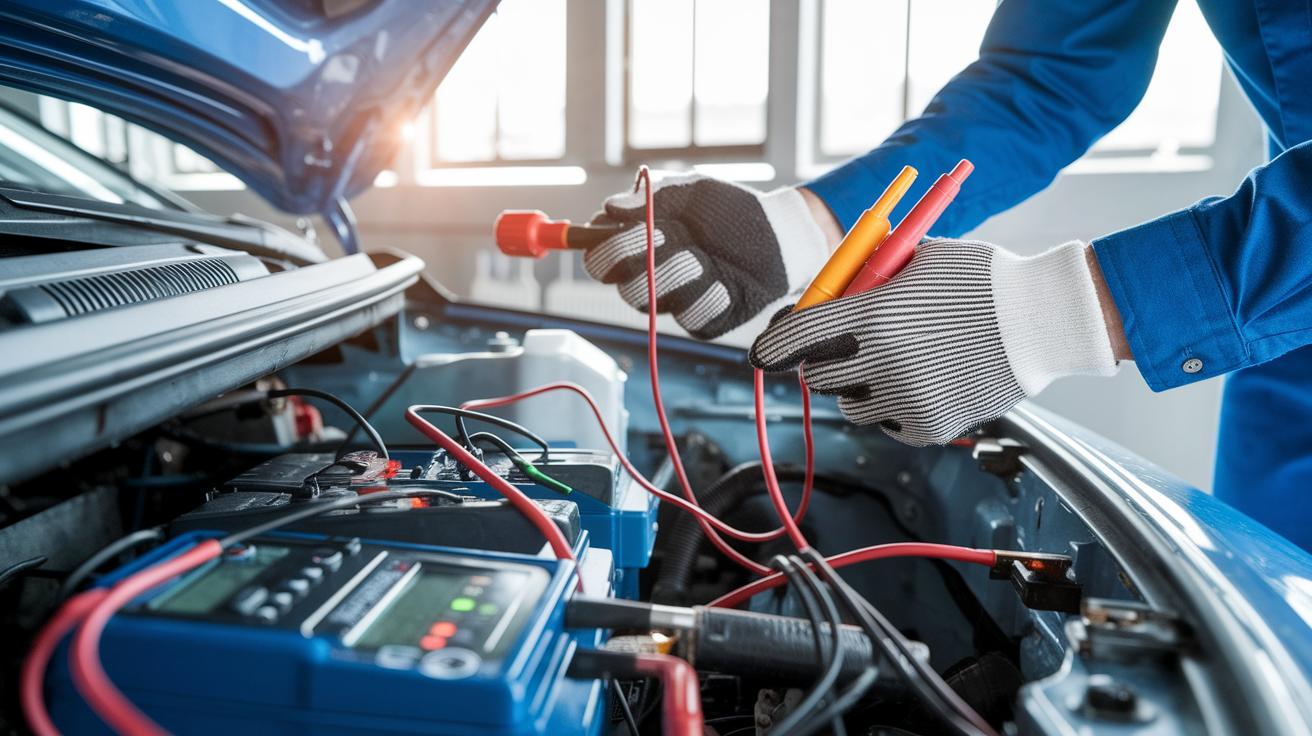
Quick Safety Check:
• Outcome: Replace your starter relay fuse safely.
• Time: 5 min
• Skill: Beginner
• Tools: Insulated gloves, safety eyewear, insulated tools, digital multimeter
• Safety: Disconnect the battery’s negative terminal; check for 0 V
- Disconnect the battery’s negative terminal. This stops live current and prevents sparks or burns.
- Put on your insulated gloves and safety eyewear. Use insulated tools and keep any metal or uninsulated items away from the fuse terminals.
- Use a digital multimeter to check that the circuit has 0 volts before you handle any parts. This extra step makes sure your work area is safe.
Follow these steps to keep your work safe and avoid any shocks or burns.
Budgeting and Sourcing Starter Relay Fuse Replacements
Quick Fix:
- What: Replace your starter relay fuse without breaking the bank.
- Time: 10–15 min to compare, check, and grab the right fuse.
- Skill: Beginner-friendly (just basic checking).
- Tools & Materials: Vehicle manual, access to online or local auto parts stores.
- Cost: Save money by doing it yourself.
- Safety: Disconnect your battery before handling the fuse.
- Compare Your Options. OEM fuses meet your car's specs perfectly but cost more. Aftermarket fuses offer a lower price and work fine for regular driving.
- Check the Part Number. Look at your vehicle manual or the label on the old fuse to match the part number. This step makes sure the new fuse fits your car’s needs.
- Shop Smart. Choose trustworthy auto parts stores or reliable online shops. Read reviews or ask at local shops to be sure you’re buying a quality fuse.
- Save on Labor. Installing the fuse yourself cuts out professional fees, letting you invest more in quality parts overall.
Final Words
In the action from diagnosing a no-crank condition to swapping out a faulty fuse, this guide broke the process into clear, hands-on steps. It covered everything from identifying symptoms and isolating the battery to testing and confirming stable operation while emphasizing safety throughout.
The post also shared tips on sourcing the right tools and parts. Now, you're set for a smooth starter relay fuse replacement. Every step builds your skill and keeps your project on track. Keep at it, and enjoy the satisfaction of a job done right.
FAQ
What is the typical price for a starter relay fuse replacement?
The starter relay fuse replacement cost usually ranges from about $5 to $20 depending on the vehicle and whether you buy OEM or aftermarket parts.
How do I know if my starter relay fuse is blown?
You know your starter relay fuse is blown when your engine doesn’t crank and you hear rapid clicking. A visual inspection may reveal a melted or broken fuse element.
What does a starter relay diagram display?
A starter relay diagram shows the layout of the relay’s wiring, fuse contacts, and connections between the battery and starter motor, helping you locate the correct parts.
Which fuse controls the starter relay function?
The fuse that controls the starter relay is located in your vehicle’s main fuse box, often labeled for the ignition or starter system; check your owner manual for exact placement.
How do I remove and replace a relay fuse?
You remove and replace a relay fuse by disconnecting the battery, accessing the fuse box, removing the blown fuse, and installing a new one that matches the manufacturer’s amperage rating.
Where is the starter relay fuse typically located?
The starter relay fuse is generally found in the under-hood fuse box on the driver’s side, though some vehicles have it under the dash or near the fender.
How does the process differ for Toyota models?
For Toyota models, the fuse box may have a unique layout and labeling. It’s best to refer to your owner’s manual for the precise location and replacement procedure.
Where can I purchase a quality starter relay fuse?
You can purchase a quality starter relay fuse at stores like AutoZone or NAPA, ensuring you select one that meets your vehicle manufacturer’s specifications.